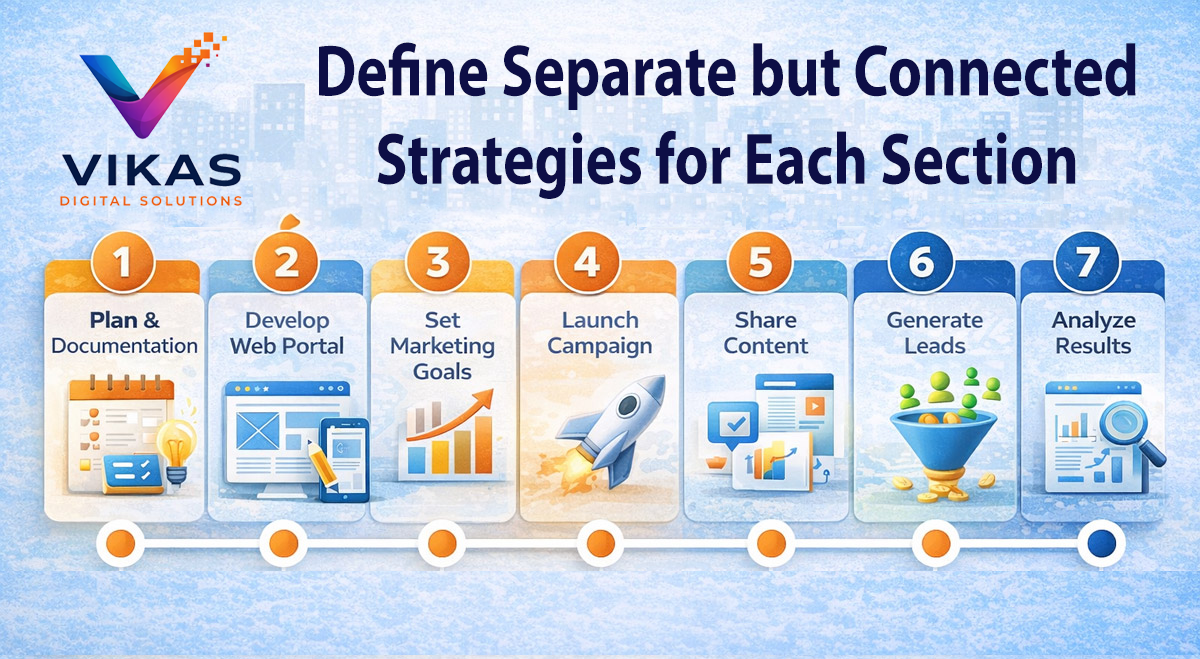
Introduction: Why I Follow a 100-Day Digital Execution Model
In my experience, most digital projects fail not because of lack of ideas, but because of poor execution order, weak integration, and no review system.
Whenever I work with a business as an in-house digital partner, I follow a 100-day structured work plan. This allows me to:
-
Build a strong web & commerce foundation
-
Launch with SEO and performance readiness
-
Start lead generation and revenue early
-
Continuously analyze, realign, and scale
This blog explains exactly how I plan, execute, analyze, and optimize a digital business journey using 24 connected steps, broken into clear phases.
PHASE 1: STRATEGY, PLANNING & FOUNDATION
1. Plan (Day 1–5)
Business Objective
Understand the business deeply and align digital goals with revenue goals.
Step-by-Step Work
-
Day 1–2: Business model, audience, competitors analysis
-
Day 3: Define short-term & long-term digital goals
-
Day 4: Decide KPIs (leads, sales, traffic, engagement)
-
Day 5: Create 100-day digital roadmap
Deliverables
-
Digital strategy document
-
Target audience & funnel mapping
KPIs
-
Clear business KPIs defined
-
Approved execution roadmap
Risks
-
Unclear vision
-
Unrealistic expectations
Tools
-
Notion, Google Docs, SEMrush, Google Trends
2. Design (Day 6–10)
Business Objective
Create a conversion-focused, user-friendly design, not just a beautiful layout.
Step-by-Step Work
-
UX wireframes based on user journey
-
Homepage, category, product, landing layouts
-
Mobile-first design validation
Deliverables
-
UI/UX wireframes
-
Design system & brand consistency
KPIs
-
Bounce rate projection
-
Mobile usability readiness
Risks
-
Overdesign without usability
-
Ignoring mobile users
Tools
-
Figma, Adobe XD, Canva
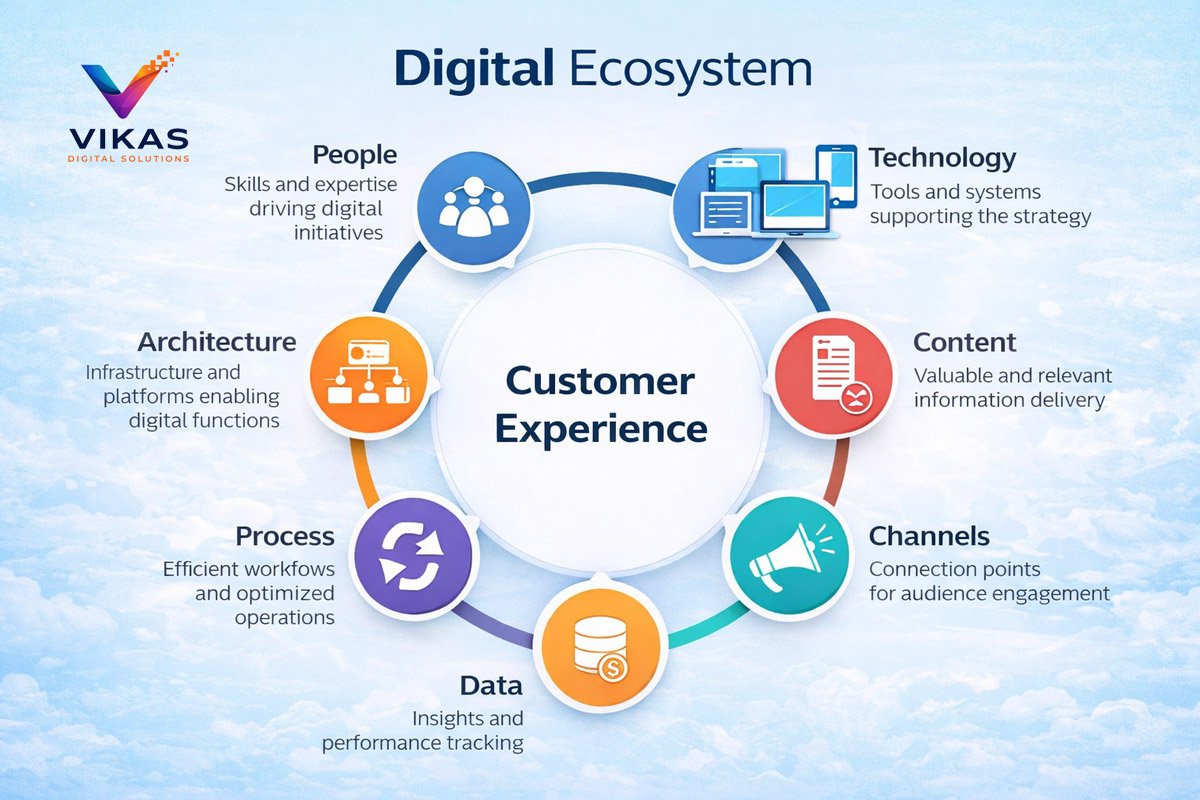
3. Web Portal Required Features (Day 11–15)
Business Objective
Define features that support business growth, not unnecessary complexity.
Step-by-Step Work
-
User roles & permissions
-
Product/catalog structure
-
Checkout & lead capture logic
Deliverables
-
Feature requirement document
-
Role-based access mapping
KPIs
-
Feature readiness vs business goals
Tools
-
Trello, Notion, CMS documentation
PHASE 2: INFRASTRUCTURE & DEVELOPMENT (Day 16–40)
4. Hosting & Domain Purchase (Day 16–18)
Objective
Ensure performance, scalability, and security.
Steps
-
Domain selection with brand & SEO view
-
Hosting based on traffic & platform
Tools
-
Hostinger / AWS / Cloudways
-
Namecheap / Google Domains
5. Server Installation & Setup (Day 19–22)
Steps
-
Server OS & stack setup
-
SSL, firewall, backups
-
Email & DNS configuration
KPIs
-
Server response time
-
Security readiness
6. Development with Plugins & Modules (Day 23–30)
Objective
Build fast, scalable, and maintainable systems.
Steps
-
CMS setup (WordPress / WooCommerce)
-
Only required plugins/modules
-
Custom logic where needed
Risks
-
Plugin overload
-
Security vulnerabilities
7. Web Standards, Validation & Structure (Day 31–35)
Steps
-
HTML/CSS validation
-
Category tree planning
-
Attributes & filters setup
KPIs
-
Crawlability
-
UX clarity
8. Keyword & Content Planning (Day 36–40)
Objective
Create content that ranks and converts.
Steps
-
Keyword research (commercial + informational)
-
Content calendar
-
Timely content update plan
Tools
-
Ahrefs, GSC, Surfer SEO
PHASE 3: COMMERCE, SEO & OPTIMIZATION (Day 41–60)
9. Product Listing & Mapping (Day 41–45)
-
SEO-optimized titles & descriptions
-
Category & attribute mapping
10. Tax Zones & Rates (Day 46–47)
-
Location-based tax rules
-
Compliance setup
11. Shipping Integration (Day 48–49)
-
Courier APIs
-
Rate calculation logic
12. Payment Integration (Day 50–52)
-
Payment gateways
-
Security & test transactions
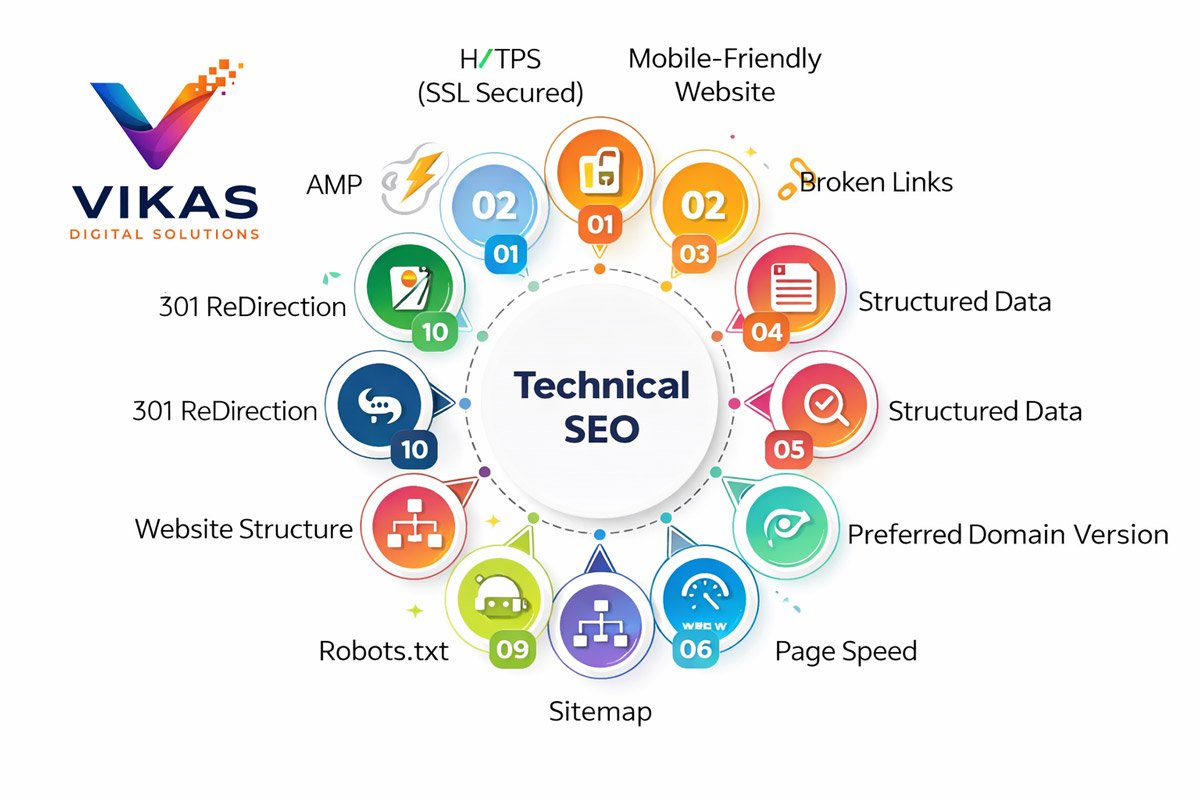
13. Technical SEO (Day 53–55)
Steps
-
Schema, sitemap, robots
-
Core Web Vitals optimization
Tools
-
GSC, PageSpeed Insights
14. On-Page SEO (Day 56–58)
Steps
-
Meta tags
-
Internal linking
-
Content intent alignment
15. Speed & Optimization (Day 59–60)
KPIs
-
Load time < 2.5 sec
-
Mobile score > 90
PHASE 4: GROWTH, MARKETING & CONTINUOUS IMPROVEMENT (Day 61–100)
16. Social Media + Lead Integration (Ongoing)
-
Content calendar
-
Shopping cart price rules
-
Lead capture forms
17. Campaigns & Landing Pages
-
PPC & social campaigns
-
Conversion-focused pages
18. Data Gathering & Revision
-
Track user behavior
-
Improve funnel leaks
19. Offers & Discount Strategy
-
Combos
-
Seasonal pricing
20. Off-Page SEO
-
Backlinks
-
Brand mentions
21. AdWords, GSC, GTM, GA4
-
Full tracking setup
-
Event mapping
22. Data Collection Tools
-
GA4
-
Looker Studio
-
CRM
23. Data Analysis
-
ROI analysis
-
CAC & LTV tracking
24. Improve, Realign & Scale (Day 90–100)
Final Objective
Turn data into better decisions and higher growth.
Steps
-
Revise strategy
-
Realign team roles
-
Increase budget where ROI works
Final Thought: Why This Connected Approach Works
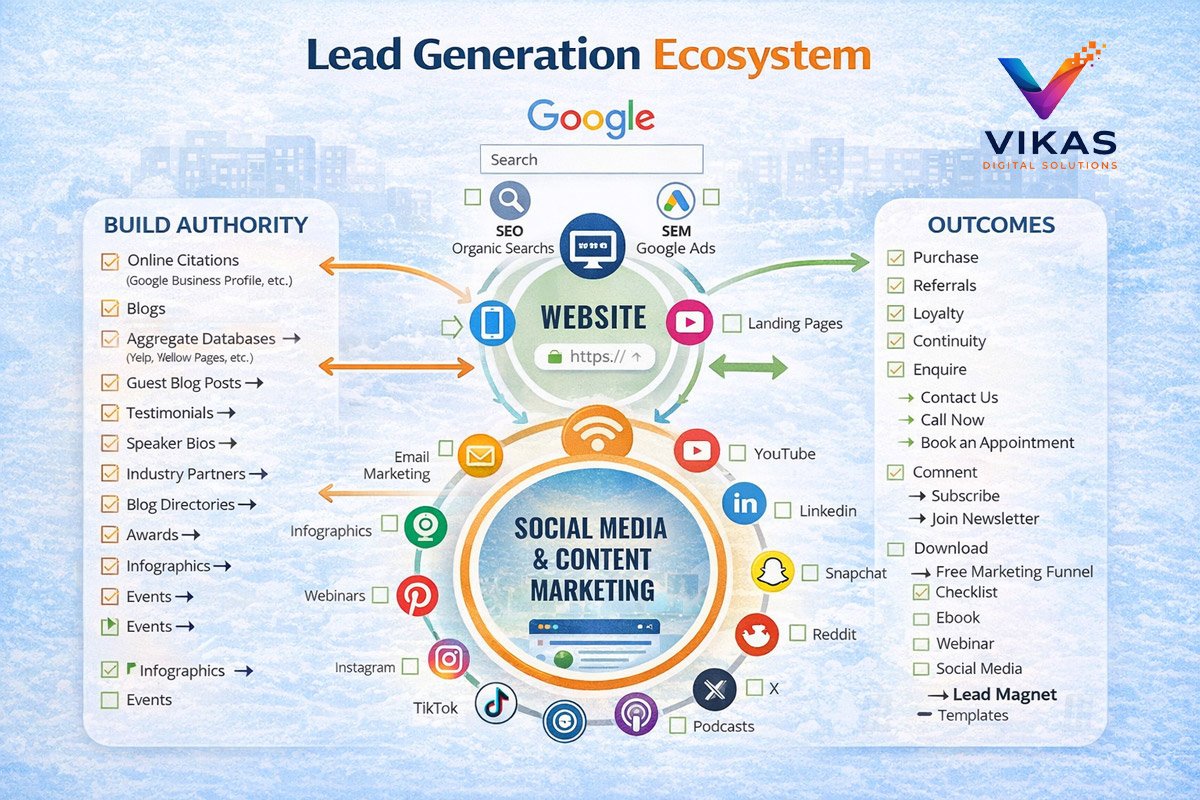
I don’t treat website, SEO, ads, content, and analytics as separate tasks.
I build connected digital ecosystems where:
-
Strategy drives design
-
Design supports conversion
-
SEO fuels content
-
Content supports ads
-
Data drives decisions
That’s how businesses move from online presence → revenue → brand authority.
