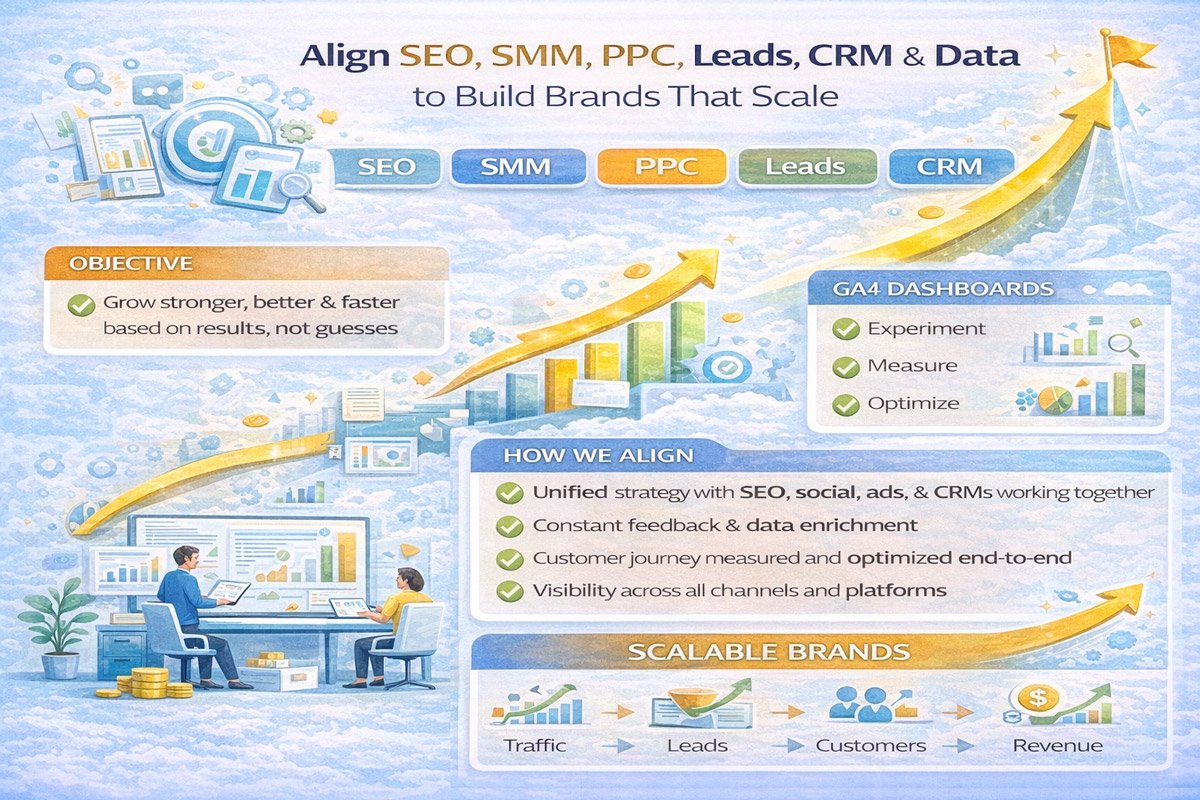
How to Align SEO, SMM, PPC, Leads, CRM & Data to Build Brands That Scale
Most businesses don’t fail online because they lack tools or budgets.
They fail because their digital teams work in silos.
SEO works in isolation.
Social media posts content without understanding conversions.
Ads drive traffic that no one follows up on.
Leads are generated, but not nurtured.
Data exists, but no one connects it to decisions.
Over the years, working hands-on across web development, SEO, SMM, paid ads, CRM, hosting, analytics, and optimization, I’ve learned one thing very clearly:
Digital growth happens only when every team functions like one connected in-house ecosystem, not separate vendors.
In this blog, I’ll walk you through how I design and operate a lean, in-house digital growth system, where each function supports the other — with a clear roadmap from foundation to long-term market leadership.
My Core Philosophy: One Web Portal, One Growth Engine
I don’t treat a website as just a “design project” or “marketing asset.”
I treat it as the central operating system of the business.
Everything connects to it:
-
SEO traffic
-
Social engagement
-
Paid ads
-
Lead capture
-
CRM follow-ups
-
Sales insights
-
Performance data
That’s why I always build growth in stages, not random activities.
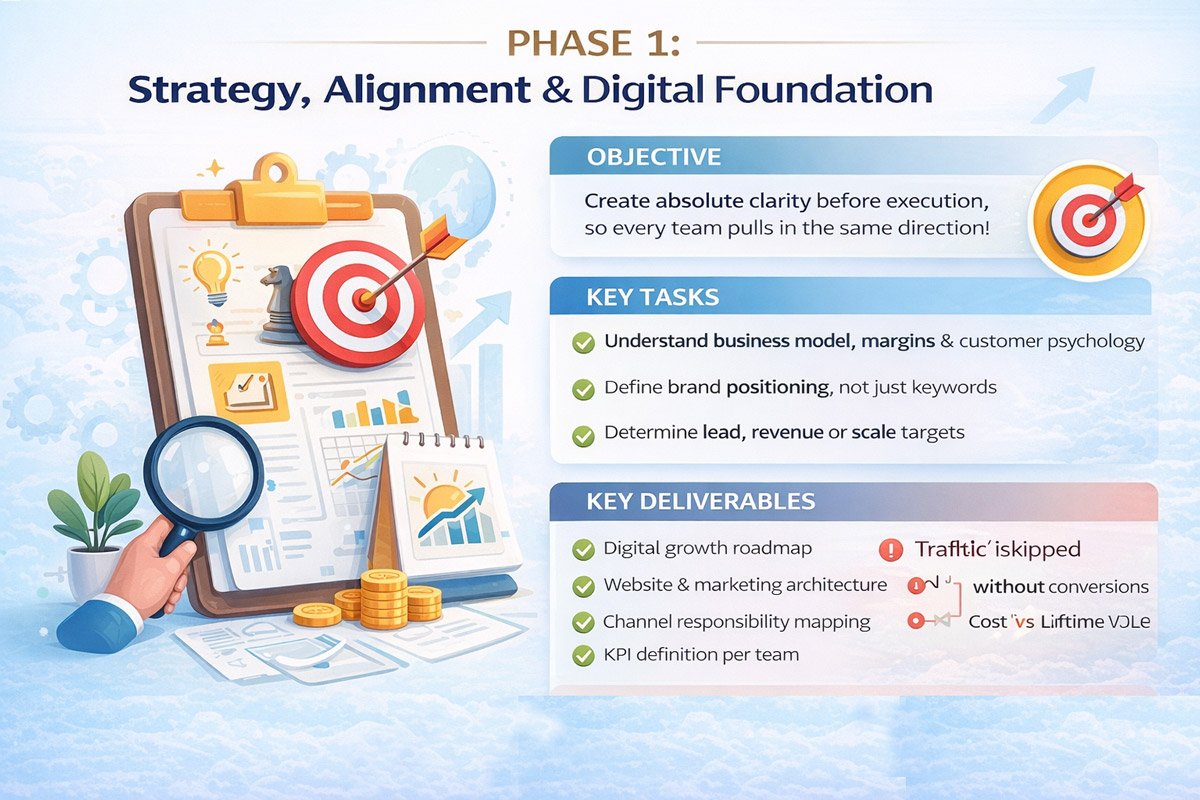
Phase 1: Strategy, Alignment & Digital Foundation
Business Objective
Create absolute clarity before execution — so every team pulls in the same direction.
What I Do Practically
-
Understand the business model, margins, sales cycle, and customer psychology
-
Define brand positioning, not just keywords
-
Decide what success looks like: leads, revenue, authority, or scale
Key Deliverables
-
Digital growth roadmap
-
Website & marketing architecture
-
Channel responsibility mapping
-
KPI definition per team
Risks if Skipped
-
Teams working hard but not smart
-
Traffic without conversions
-
Marketing spend without ROI
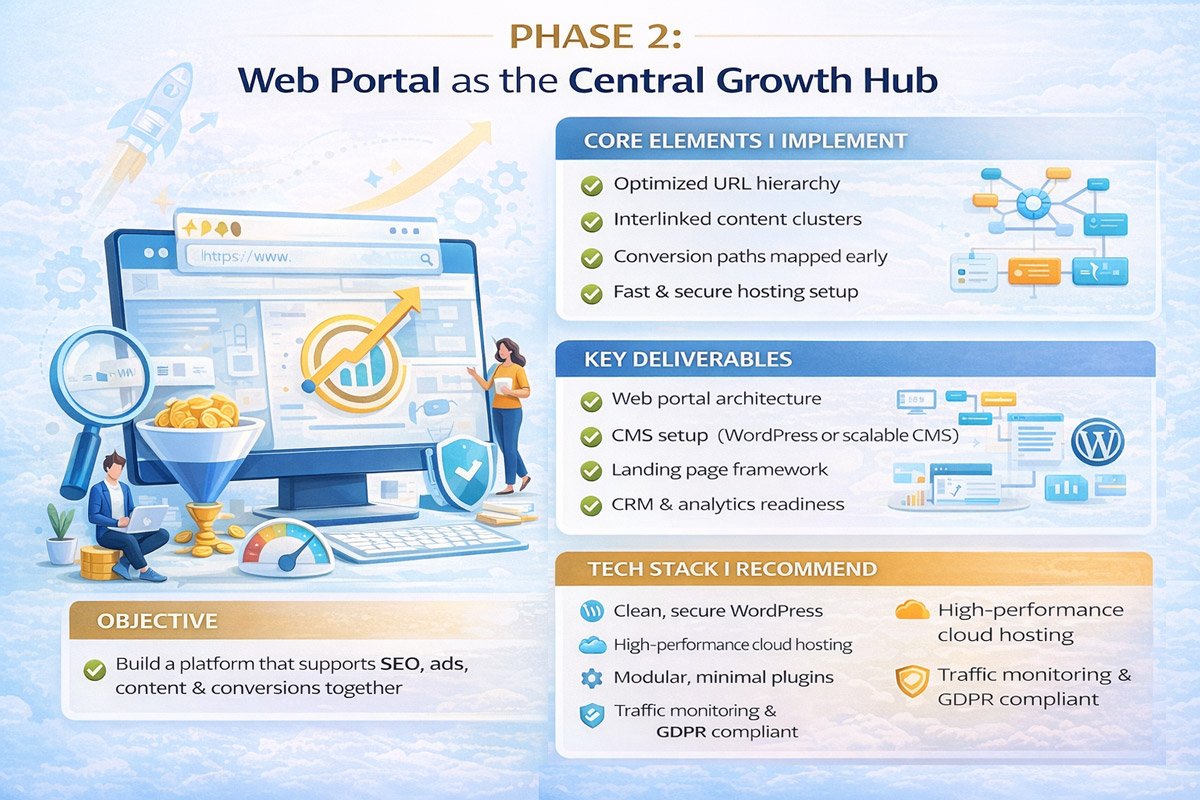
Phase 2: Web Portal as the Central Growth Hub
Business Objective
Build a platform that supports SEO, ads, content, and conversions together.
How to Build It
I don’t start with design. I start with structure.
-
SEO-friendly URL hierarchy
-
Category & content clusters
-
Conversion paths mapped before UI
-
Fast, secure, scalable hosting
Key Deliverables
-
Web portal architecture
-
CMS setup (WordPress or scalable CMS)
-
Landing page framework
-
CRM & analytics readiness
Tools I Prefer
-
WordPress (customized, not bloated)
-
Cloud hosting with performance focus
-
Security & caching layers
-
Clean, modular plugins
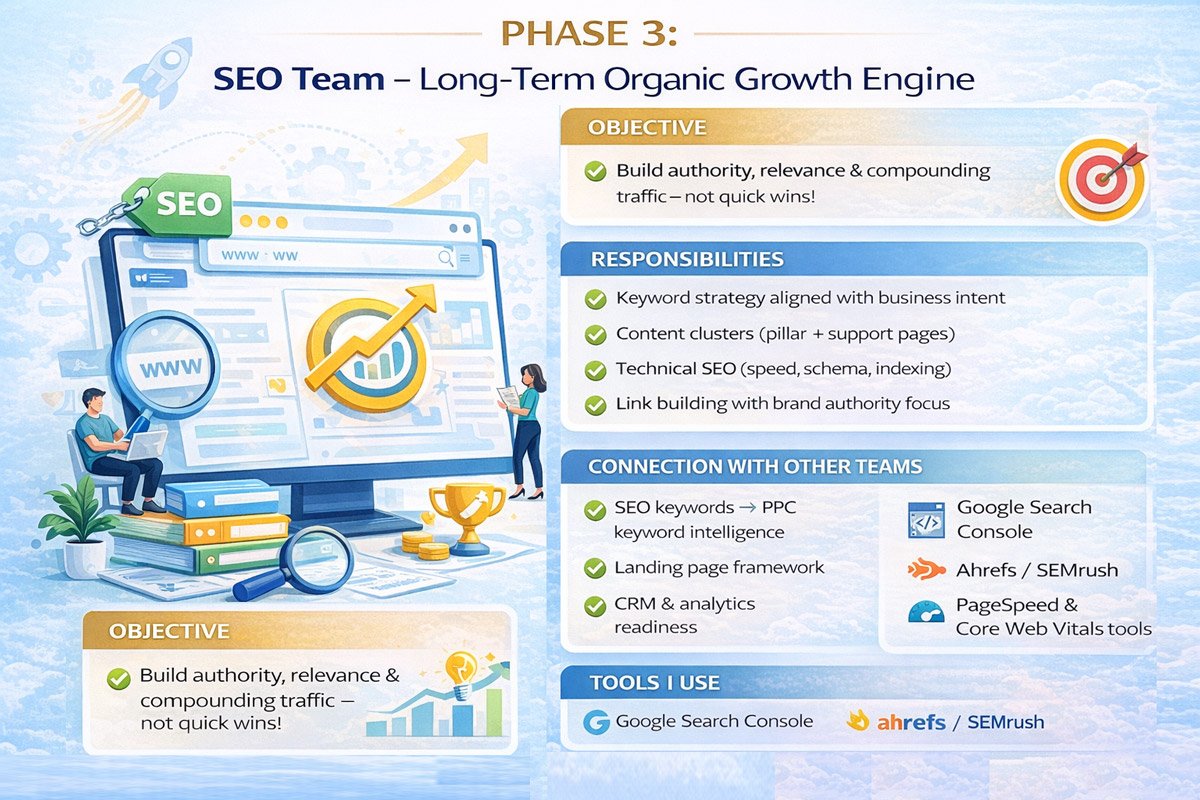
Phase 3: SEO Team – Long-Term Organic Growth Engine
SEO Objective
Build authority, relevance, and compounding traffic — not quick wins.
How to Align SEO with Other Teams
SEO is not just about rankings. It feeds content, ads, and landing pages.
SEO Team Responsibilities
-
Keyword strategy aligned with business intent
-
Content clusters (pillar + support pages)
-
Technical SEO (speed, schema, indexing)
-
Link building with brand authority focus
Connection with Other Teams
-
SEO keywords → PPC keyword intelligence
-
SEO content → Social media distribution
-
SEO landing pages → Lead generation
Tools
-
Google Search Console
-
Ahrefs / SEMrush
-
PageSpeed & Core Web Vitals tools
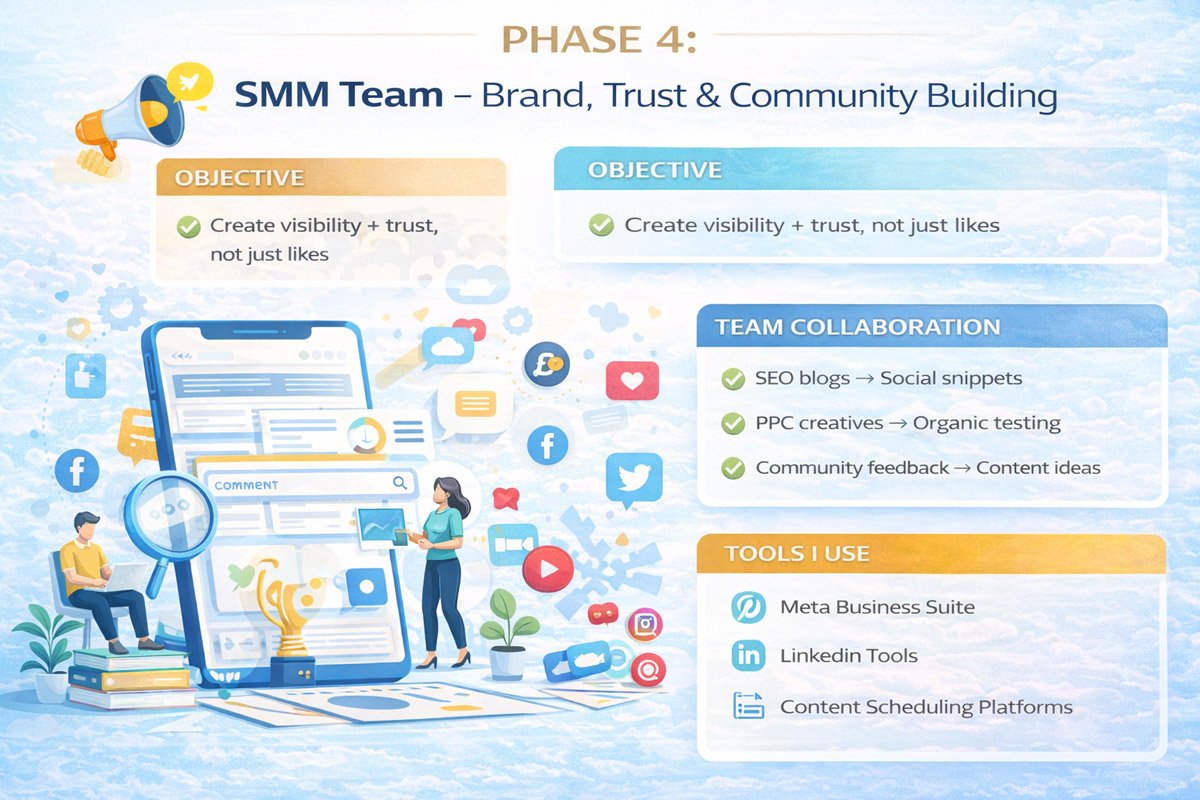
Phase 4: SMM Team – Brand, Trust & Community Building
SMM Objective
Create visibility + trust, not just likes.
How to Guide Social Media Execution
Social media should:
-
Educate
-
Engage
-
Reinforce brand voice
-
Support SEO & paid campaigns
Content Formats I Use
-
Short educational posts
-
Case studies & proof
-
Reels & carousels
-
Founder or expert positioning
Team Collaboration
-
SEO blogs → social snippets
-
PPC creatives → organic testing
-
Community feedback → content ideas
Tools
-
Meta Business Suite
-
LinkedIn tools
-
Content scheduling platforms
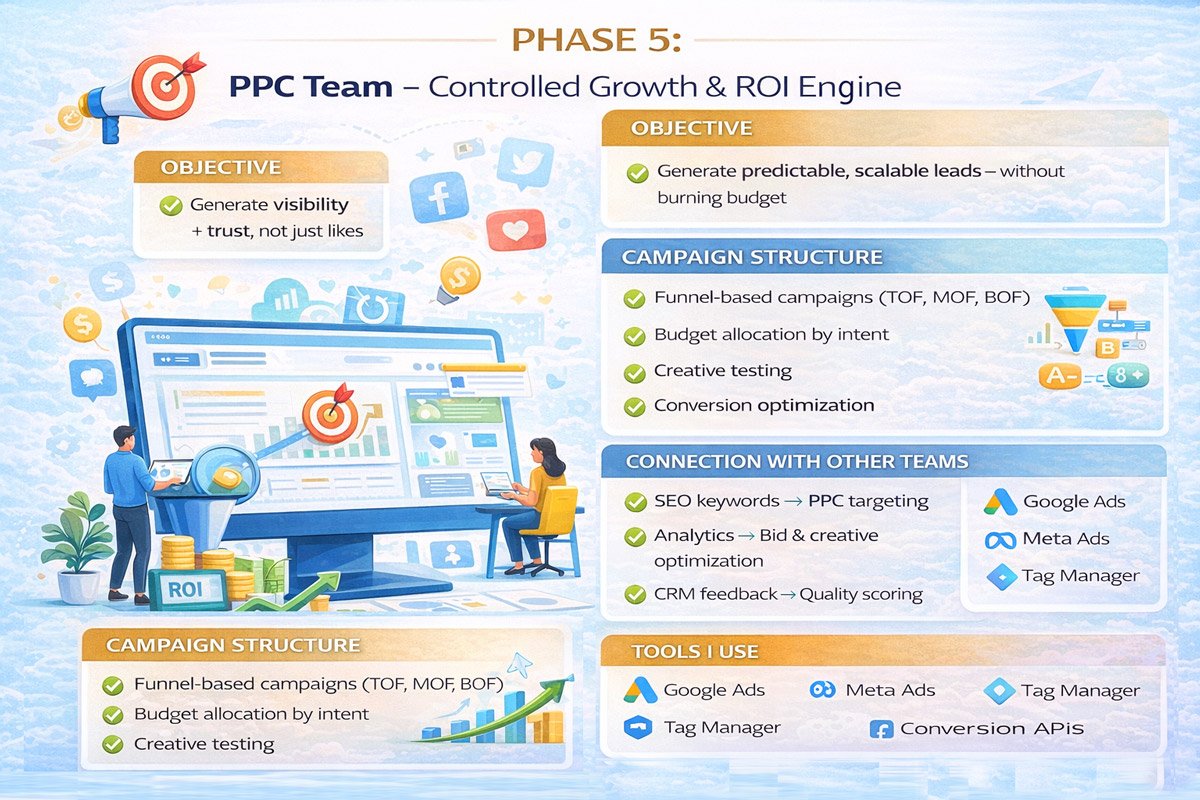
Phase 5: PPC Team – Controlled Growth & ROI Engine
PPC Objective
Generate predictable, scalable leads without burning budget.
How to Structure Paid Campaigns
-
Proper landing pages
-
CRM tracking
-
Conversion goals
-
Attribution clarity
PPC Team Focus
-
Funnel-based campaigns (TOF, MOF, BOF)
-
Budget allocation by intent
-
Creative testing
-
Conversion optimization
Connection with Other Teams
-
SEO keywords → PPC targeting
-
Analytics → bid & creative optimization
-
CRM feedback → quality scoring
Tools
-
Google Ads
-
Meta Ads
-
Tag Manager
-
Conversion APIs
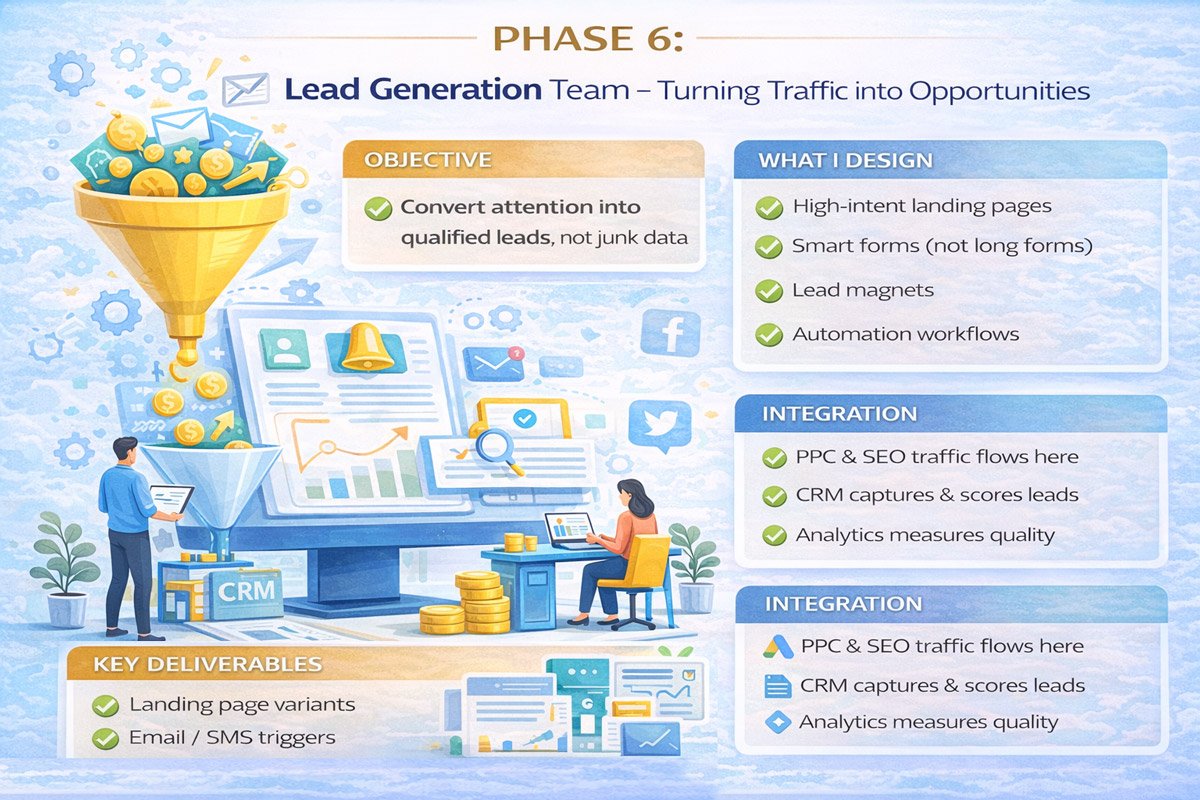
Phase 6: Lead Generation Team – Turning Traffic into Opportunities
Objective
Convert attention into qualified leads, not junk data.
What I Design
-
High-intent landing pages
-
Smart forms (not long forms)
-
Lead magnets
-
Automation workflows
Key Deliverables
-
Landing page variants
-
Email/SMS triggers
-
Lead segmentation
Integration
-
PPC & SEO traffic flows here
-
CRM captures & scores leads
-
Analytics measures quality
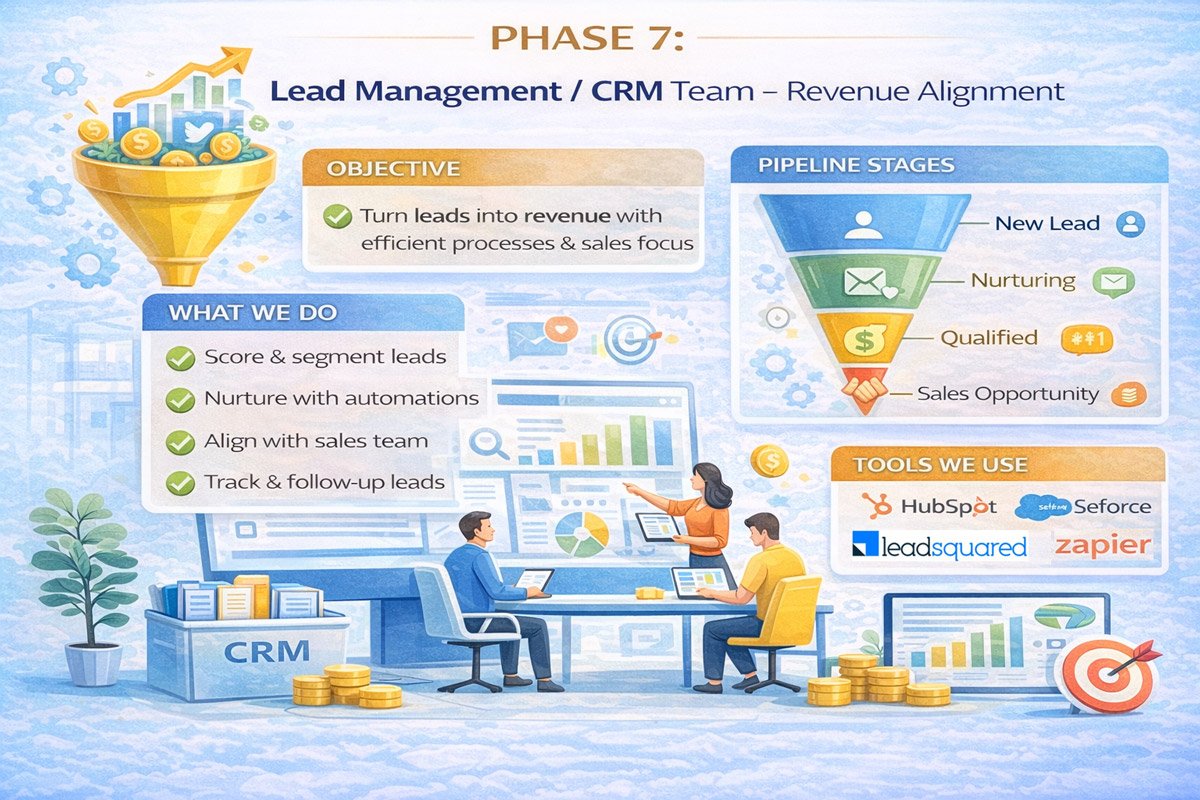
Phase 7: Lead Management / CRM Team – Revenue Alignment
Objective
Ensure no good lead is wasted.
How to Align CRM with Marketing
Marketing doesn’t stop at lead capture.
CRM handles:
-
Lead scoring
-
Pipeline stages
-
Follow-up reminders
-
Sales feedback loop
Collaboration
-
Sales feedback → campaign refinement
-
Lead quality → keyword & ad optimization
-
Conversion data → ROI clarity
Tools
-
HubSpot / Zoho / LeadSquared / custom CRM
-
Email automation
-
WhatsApp integrations
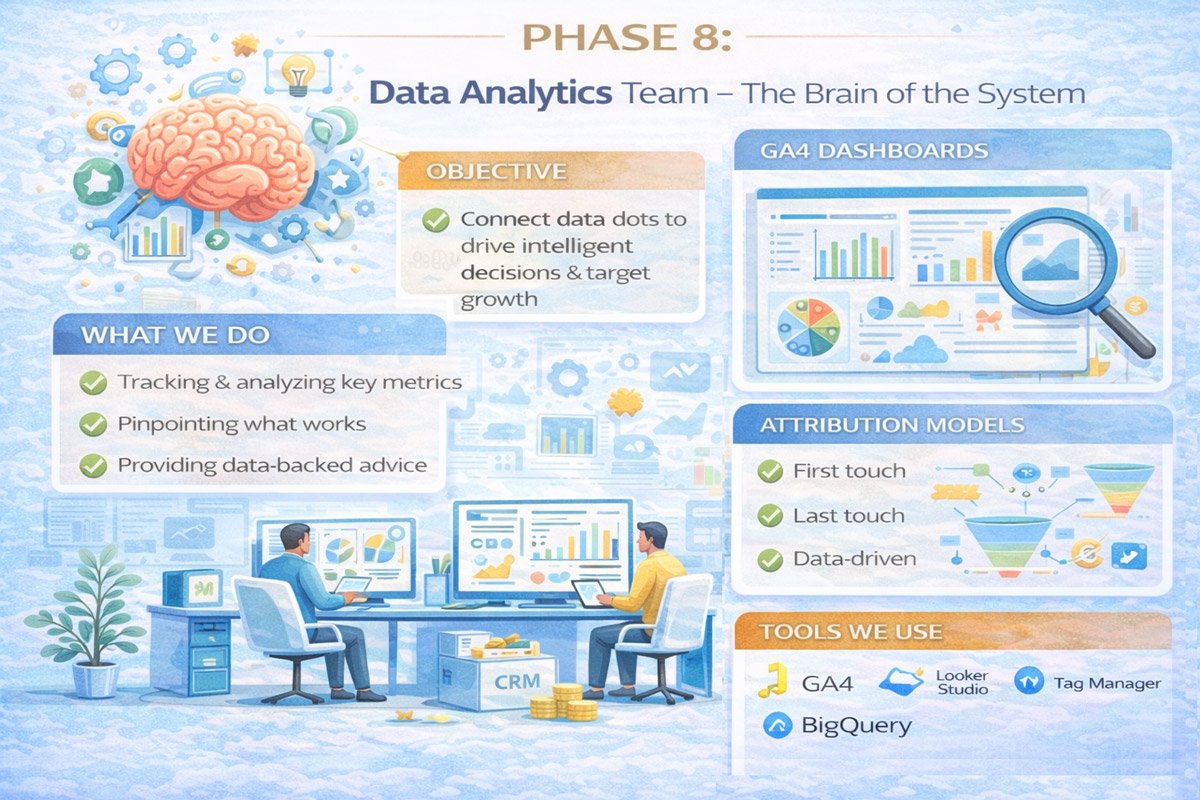
Phase 8: Data Analytics Team – The Brain of the System
Objective
Turn data into decisions, not just reports.
What I Track
-
User journeys
-
Channel attribution
-
Funnel drop-offs
-
Cost vs lifetime value
Tools I Use
-
GA4
-
Google Tag Manager
-
Custom dashboards
-
Attribution models
Output
-
Weekly insights
-
Monthly optimization plans
-
Strategy revisions
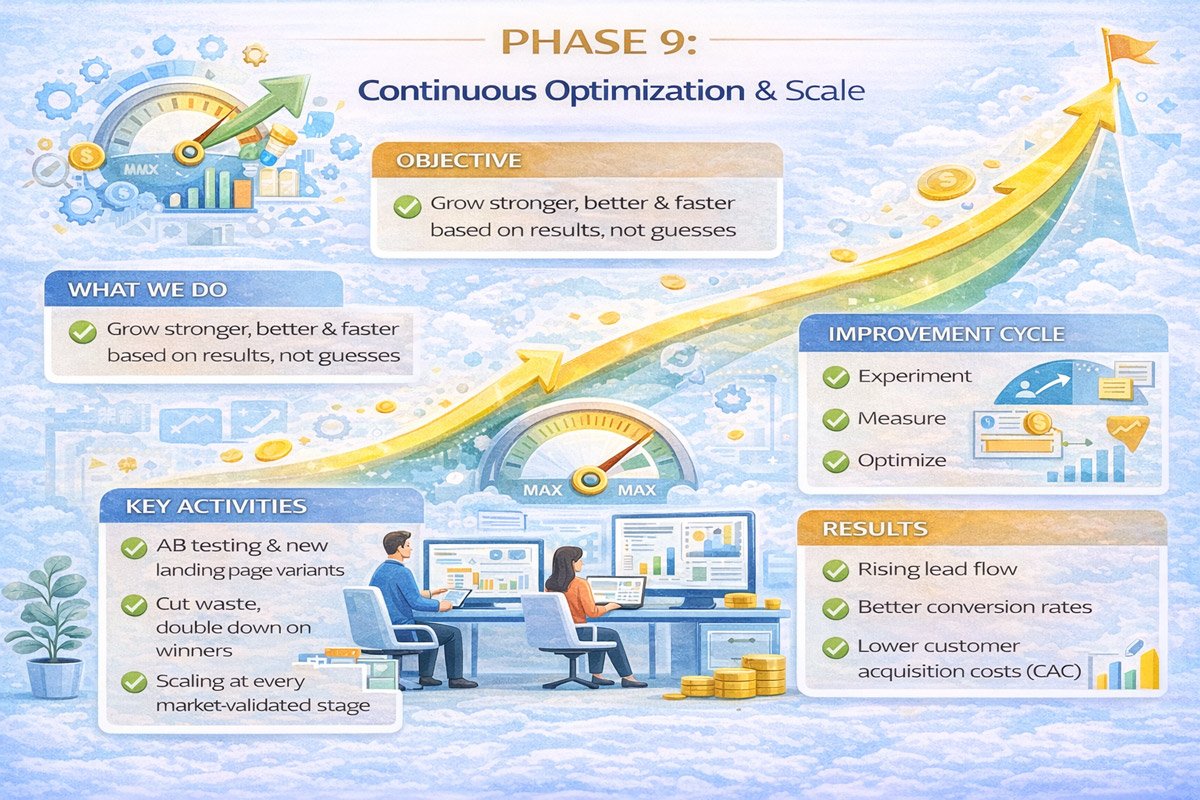
Phase 9: Continuous Optimization & Scale
This is where most businesses stop — and lose momentum.
What I Improve Continuously
-
SEO content depth
-
Ad creatives & targeting
-
Conversion rates
-
Automation workflows
-
Team alignment
Result
-
Lower cost per lead
-
Higher conversion rates
-
Stronger brand authority
-
Sustainable growth
Why This In-House Digital Partner Model Works
Unlike agencies:
-
I don’t jump between clients emotionally
-
I understand internal limitations
-
I optimize for long-term outcomes
We work like:
An internal digital growth architect who owns the outcome, not just tasks.
Final Thought
Digital success is not about:
-
Hiring more tools
-
Spending more on ads
-
Posting more content
It’s about connecting people, platforms, processes, and data into one growth ecosystem.
That’s how I help businesses:
-
Build brands
-
Generate revenue
-
And move toward long-term market leadership
