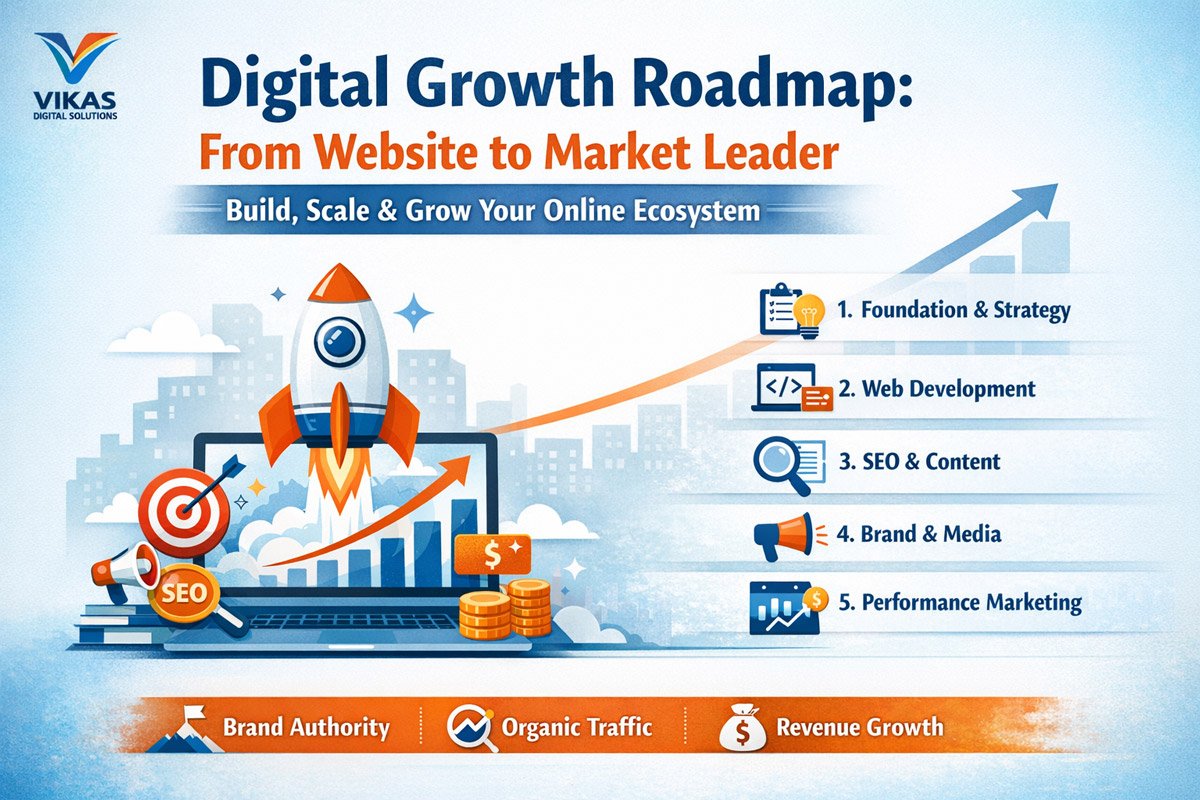
Introduction: Why I Don’t Believe in “Just Making a Website”
In my 15+ years of hands-on experience, I’ve seen one mistake repeated again and again — businesses think launching a website means going digital.
In reality, a website without strategy is just an online brochure.
I work as an in-house digital partner, not as a traditional agency. That means I take ownership of the entire digital ecosystem — from web portal architecture to SEO, content, paid marketing, analytics, CRM, and continuous optimization.
In this blog, I’m sharing the exact stage-wise roadmap I follow to help businesses:
-
Build real brand value
-
Generate sustainable revenue
-
Improve Google rankings
-
Increase user engagement
-
Create long-term market leadership
This roadmap is designed for lean in-house teams who want control, transparency, and scalability.
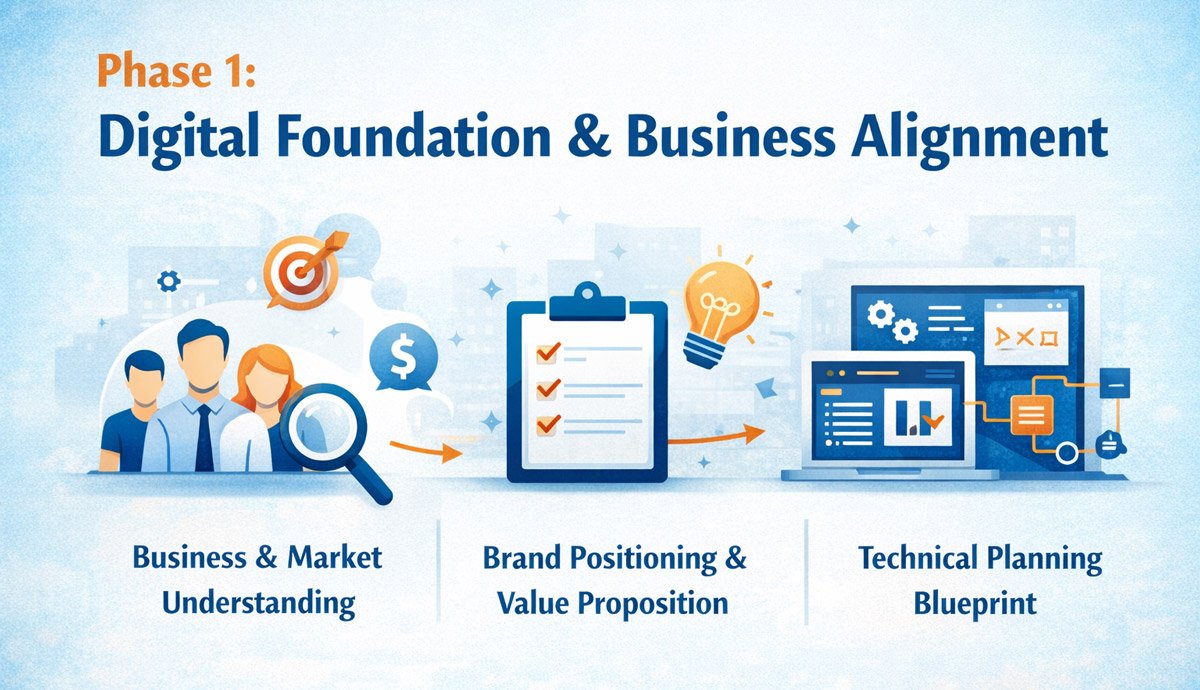
Phase 1: Digital Foundation & Business Alignment
Business Objective
At this stage, my goal is simple:
Align digital efforts with real business goals — not vanity metrics.
Before touching design or marketing, I make sure the business direction is clear.
Key Deliverables
1. Business & Market Understanding
-
Target audience behavior
-
Buying journey
-
Competitor digital strengths & gaps
2. Brand Positioning & Value Proposition
-
What problem the business solves
-
Why someone should choose this brand
-
How messaging should feel across all channels
3. Technical Planning Blueprint
-
CMS (Content Management System) architecture
-
Hosting & scalability requirements
-
Security & performance needs
Success Metrics (KPIs)
-
Clear ICP (Ideal Customer Profile) defined
-
Finalized business goals (leads, sales, subscriptions, etc.)
-
Approved digital roadmap & timelines
Risks & Dependencies
-
Unclear business vision
-
Stakeholders focused only on “design”
-
Budget mismatch with growth expectations
Best Tools & Software
-
Google Trends – Market demand analysis
-
SEMrush / Ahrefs – Competitor & keyword research
-
Notion – Documentation & roadmap planning
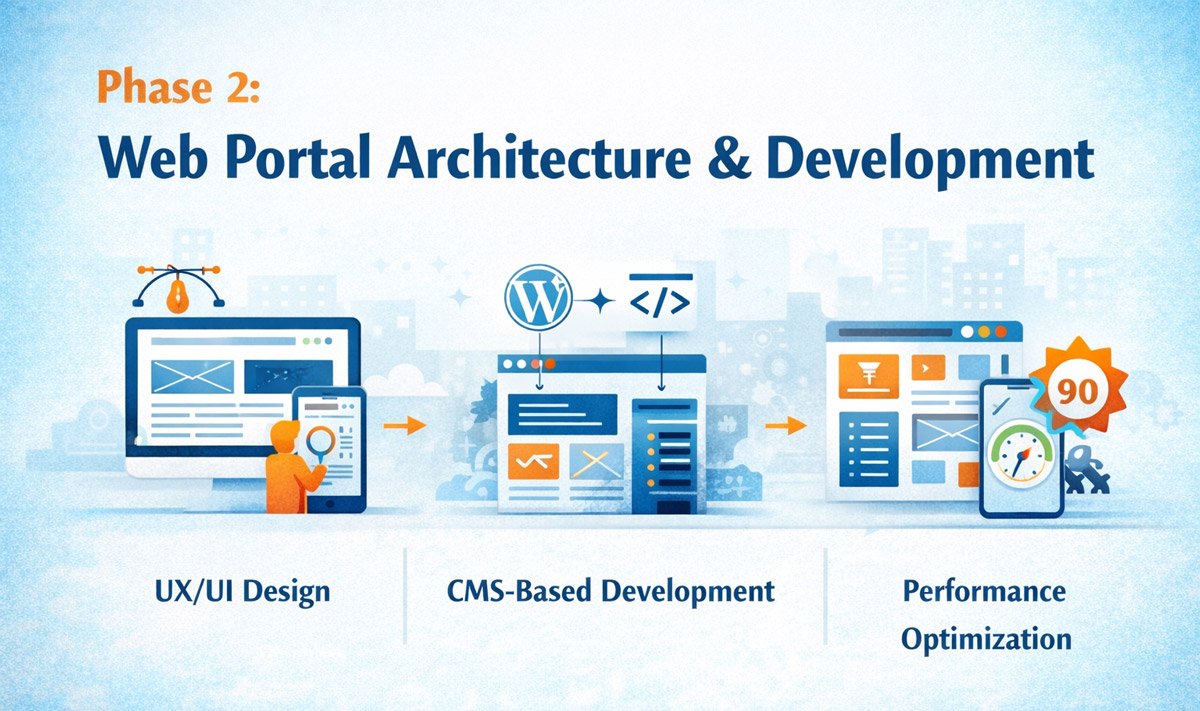
Phase 2: Web Portal Architecture & Development
Business Objective
Here my objective is to build a fast, scalable, SEO-ready web portal that supports long-term growth — not just launch day.
Key Deliverables
1. UX/UI (User Experience / User Interface) Design
-
User intent
-
Conversion paths
-
Ease of navigation
2. CMS-Based Development (WordPress / Headless CMS)
-
Content teams can work independently
-
SEO becomes scalable
-
Feature expansion is easier
3. Performance Optimization
-
Core Web Vitals (LCP, INP, CLS)
-
Mobile-first responsiveness
-
Clean code & caching
Success Metrics (KPIs)
-
Page load under 2.5 seconds
-
Mobile usability score above 90
-
Crawlability & indexability verified
Risks & Dependencies
-
Overloaded themes & plugins
-
Ignoring SEO during development
-
Poor hosting environment
Best Tools & Software
-
WordPress – Scalable CMS
-
Elementor / Gutenberg – Flexible layout control
-
LiteSpeed / WP Rocket – Caching & performance
-
Google PageSpeed Insights – Performance tracking
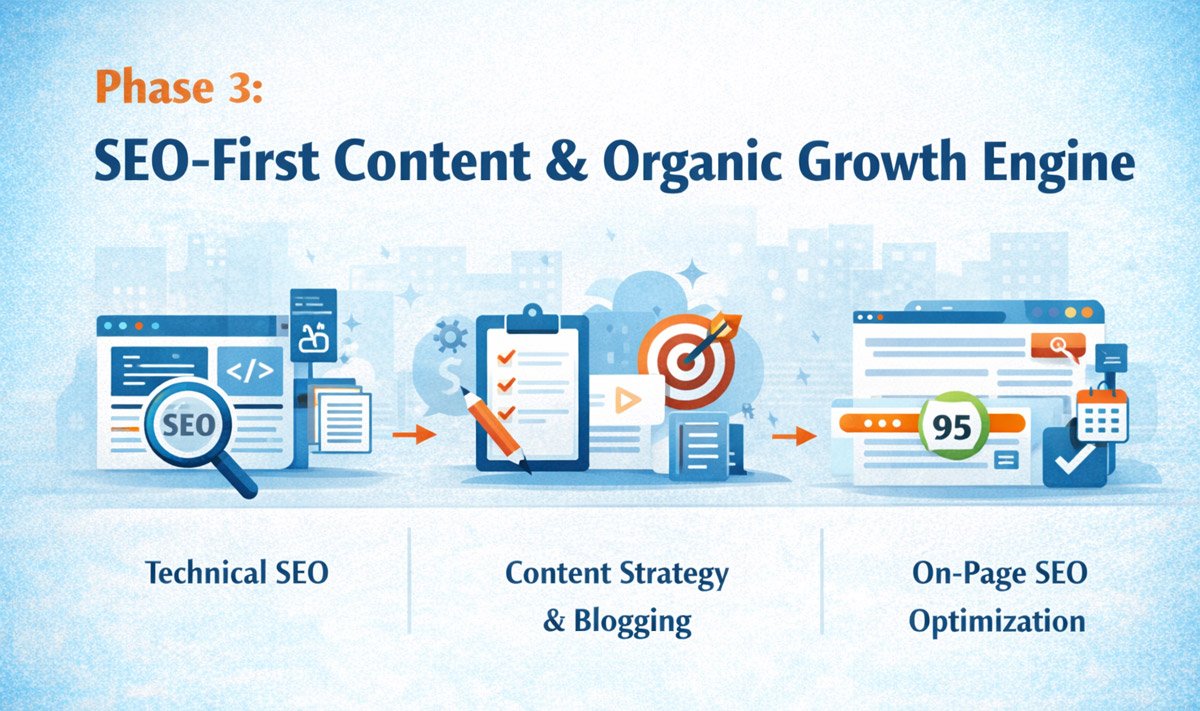
Phase 3: SEO-First Content & Organic Growth Engine
Business Objective
This phase is about earning Google trust and building long-term organic traffic.
SEO is not a one-time task — it’s a continuous system.
Key Deliverables
1. Technical SEO (Search Engine Optimization)
-
Clean URL structure
-
Schema markup
-
XML sitemaps & robots.txt
2. Content Strategy & Blogging
-
Problem-solving blogs
-
Service-based landing pages
-
Internal linking structure
3. On-Page SEO Optimization
-
Titles & meta descriptions
-
Heading hierarchy (H1–H4)
-
Content intent matching
Success Metrics (KPIs)
-
Keyword ranking improvements
-
Organic traffic growth
-
Average session duration increase
Risks & Dependencies
-
Thin or copied content
-
Keyword stuffing
-
Inconsistent publishing
Best Tools & Software
-
Google Search Console – Indexing & performance
-
Yoast / Rank Math – On-page SEO
-
Surfer SEO – Content optimization
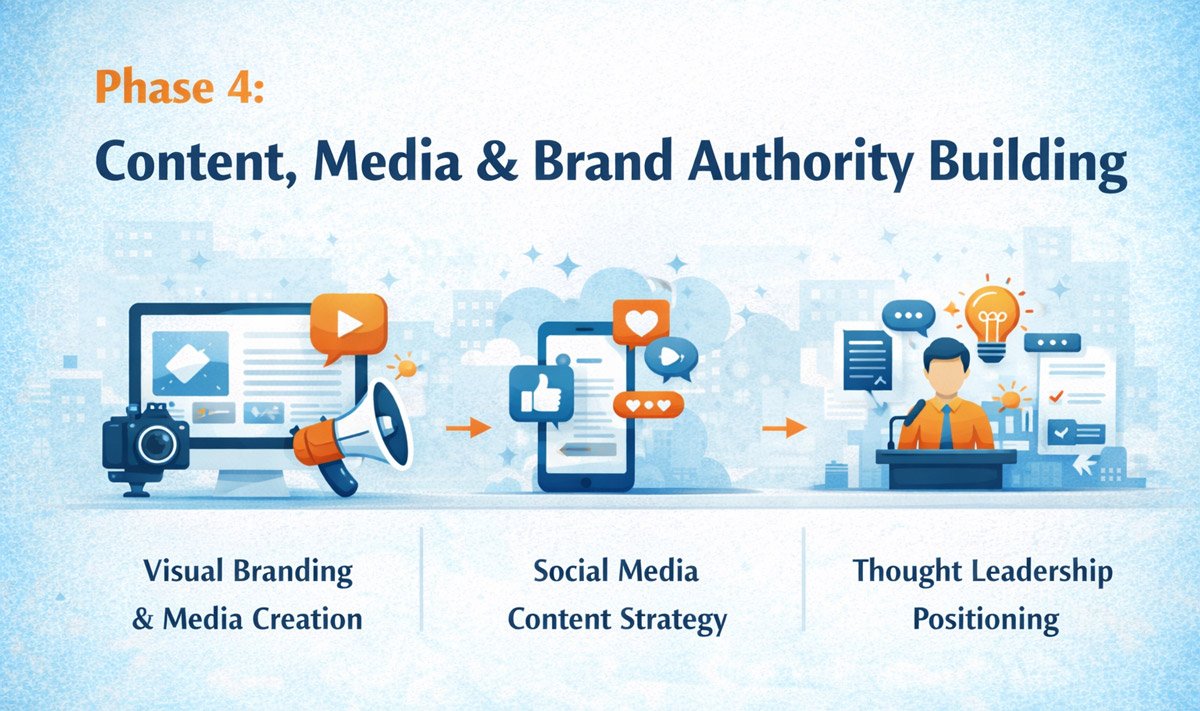
Phase 4: Content, Media & Brand Authority Building
Business Objective
At this stage, I focus on brand recall and trust — not just traffic.
Key Deliverables
1. Visual Branding & Media Creation
-
Graphics
-
Videos
-
Infographics
with brand voice and audience expectations.
2. Social Media Content Strategy
-
Educational posts
-
Authority-driven content
-
Engagement-based formats
3. Thought Leadership Positioning
-
A problem-solver
-
A trusted advisor
-
Not a sales machine
Success Metrics (KPIs)
-
Engagement rate
-
Brand mentions
-
Direct traffic growth
Risks & Dependencies
-
Posting without strategy
-
Inconsistent brand tone
-
Chasing trends blindly
Best Tools & Software
-
Canva / Adobe – Creative design
-
Meta Business Suite – Social publishing
-
Buffer / Hootsuite – Scheduling
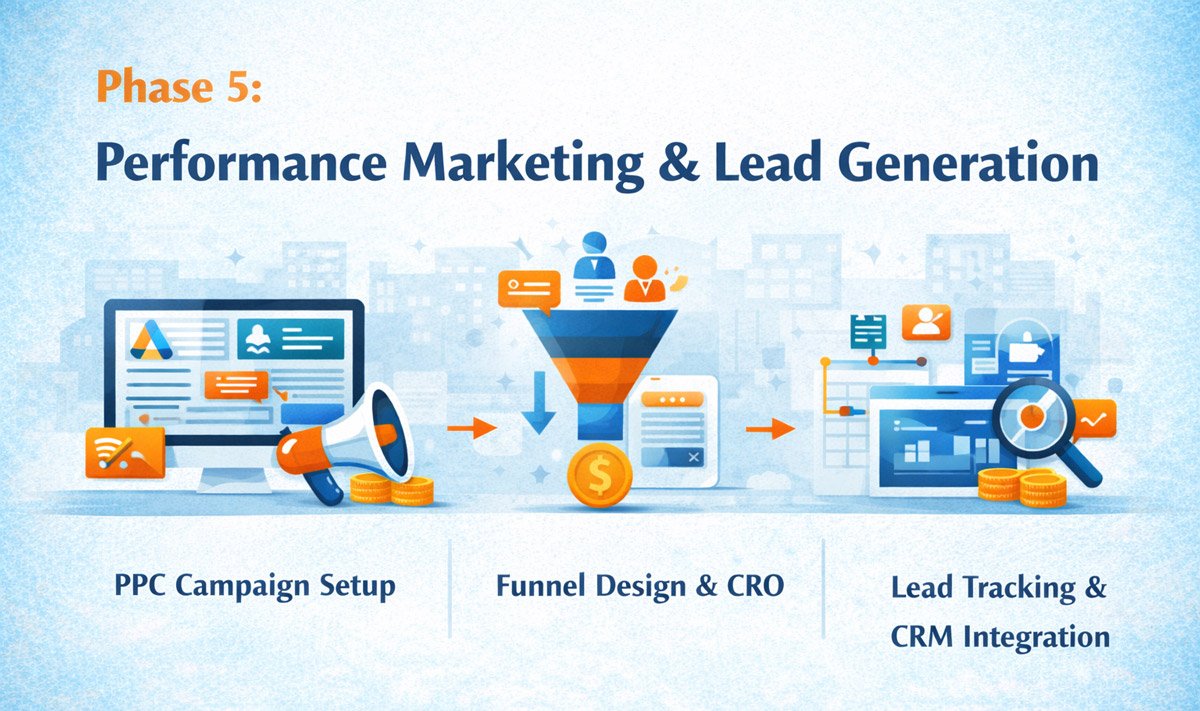
Phase 5: Performance Marketing & Lead Generation
Business Objective
Here my focus shifts to predictable revenue generation.
Key Deliverables
1. PPC (Pay Per Click) Campaign Setup
-
Google Ads
-
Meta Ads
-
Conversion-focused landing pages
2. Funnel Design & CRO (Conversion Rate Optimization)
-
Call-to-action placement
-
Form design
-
User flow
3. Lead Tracking & CRM Integration
-
Tracked
-
Scored
-
Followed up
Success Metrics (KPIs)
-
Cost per lead (CPL)
-
Conversion rate
-
Return on ad spend (ROAS)
Risks & Dependencies
-
Poor landing pages
-
No conversion tracking
-
Spending without data
Best Tools & Software
-
Google Ads
-
Meta Ads Manager
-
HubSpot / Zoho CRM
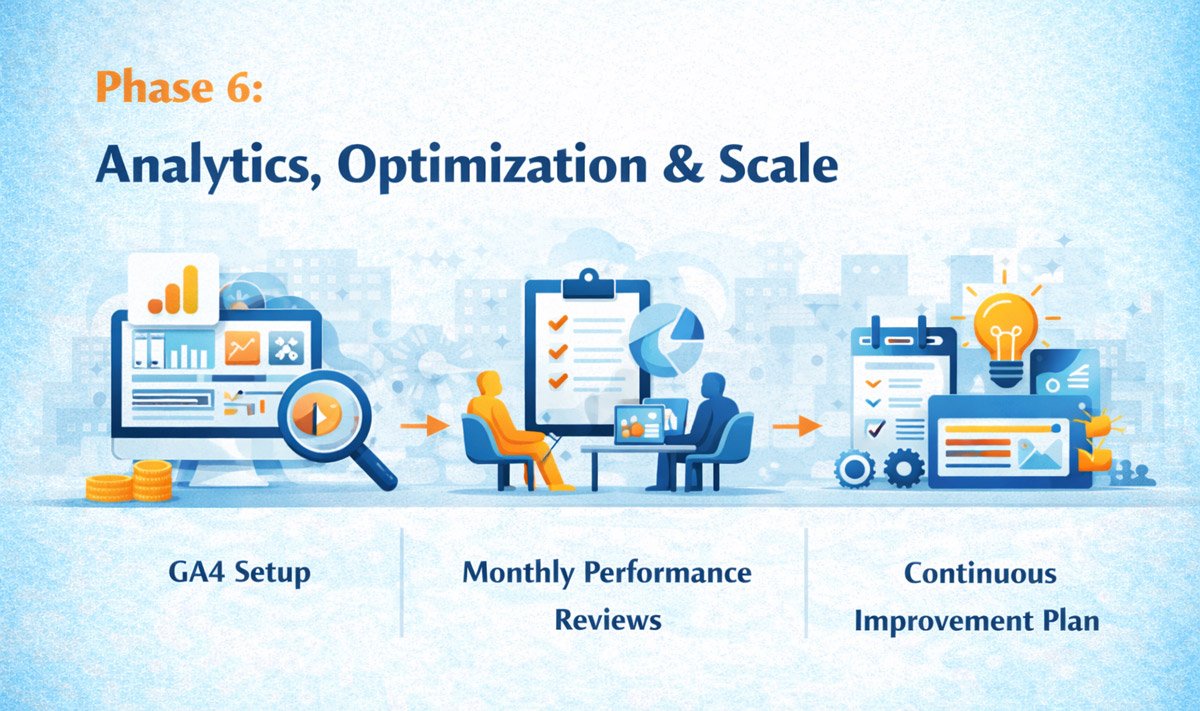
Phase 6: Analytics, Optimization & Scale
Business Objective
This is where businesses either grow smartly or waste money.
I rely on data — not assumptions.
Key Deliverables
1. GA4 (Google Analytics 4) Setup
-
User behavior
-
Funnel drop-offs
-
Channel performance
2. Monthly Performance Reviews
-
What’s working
-
What’s not
-
Where to invest next
3. Continuous Improvement Plan
-
Content
-
Ads
-
UX
-
SEO
Success Metrics (KPIs)
-
Customer acquisition cost (CAC)
-
Lifetime value (LTV)
-
Retention rate
Risks & Dependencies
-
Ignoring analytics
-
No experimentation culture
-
Static strategy
Best Tools & Software
-
Google Analytics 4
-
Google Looker Studio
-
Hotjar – User behavior tracking
Final Thoughts: Why This Approach Works
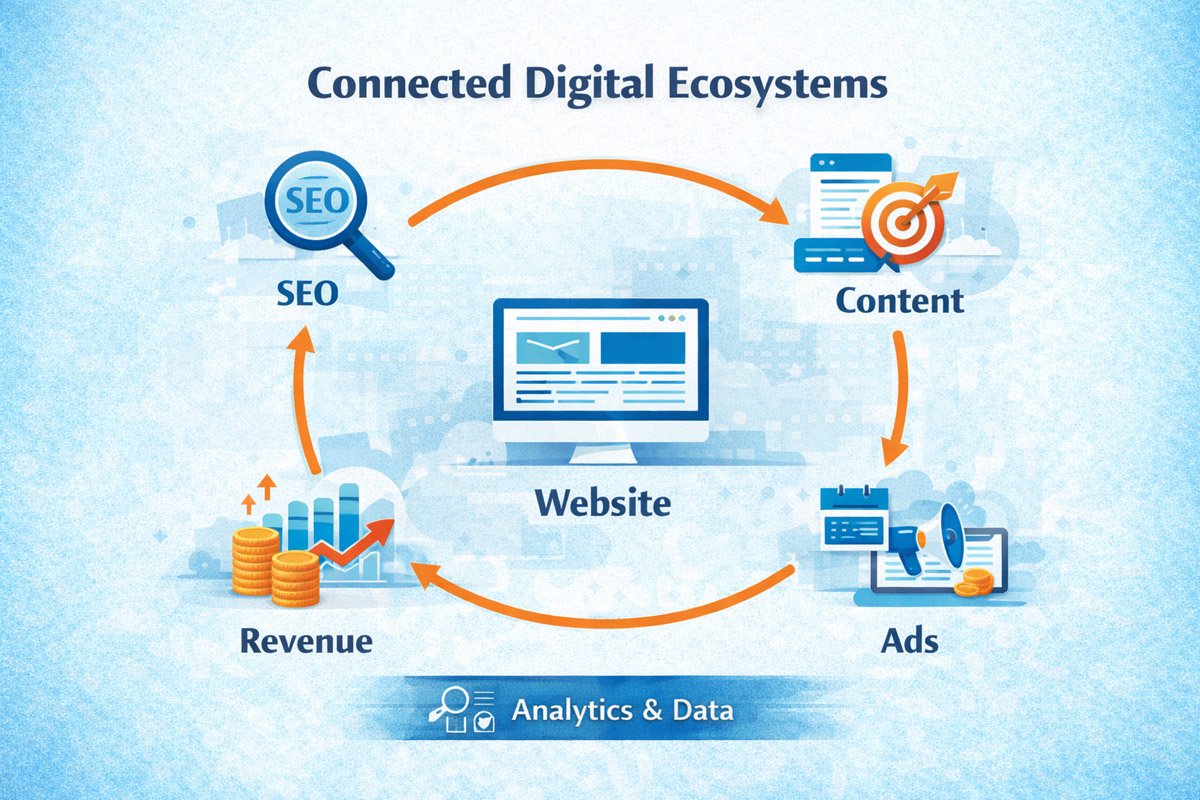
We build connected digital ecosystems where:
-
Website supports SEO
-
SEO supports content
-
Content supports ads
-
Ads support revenue
-
Data supports decisions
If you’re looking for someone who works like an in-house digital growth partner, takes real ownership, and builds systems for long-term success, this roadmap is exactly how I do it.
